
Accessing the 2013 Jeep Grand Cherokee’s operating information manual, available online via ManualsLib, provides crucial details for vehicle operation and maintenance.
Overview of the Vehicle
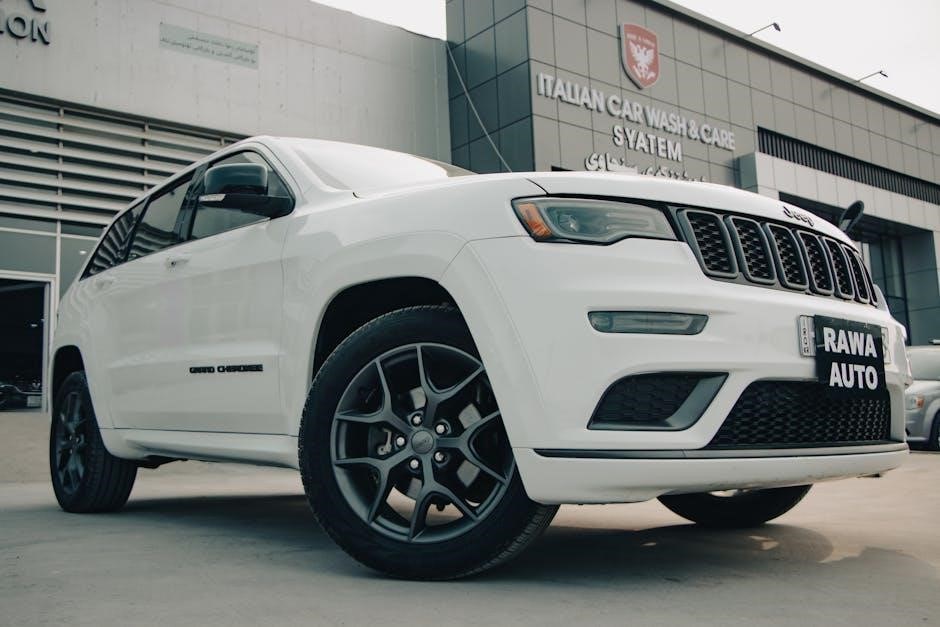
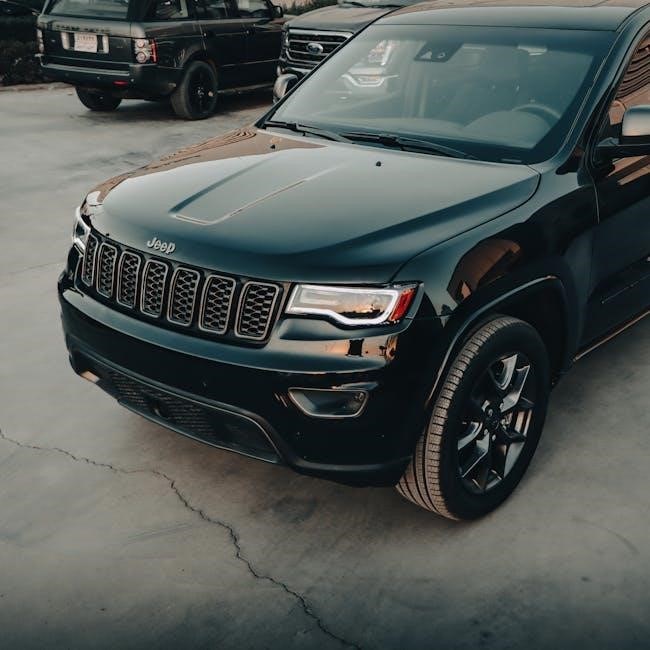
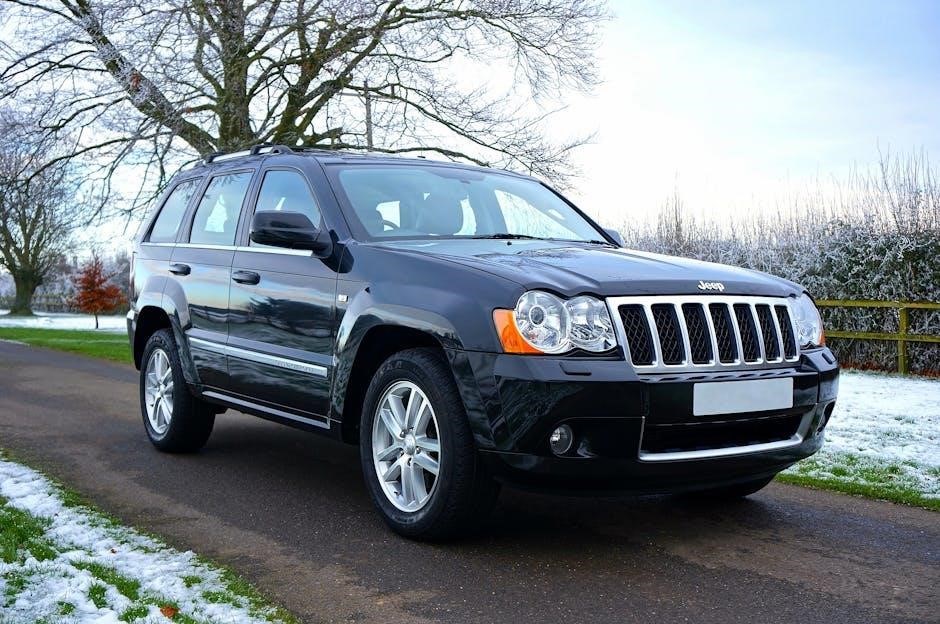
The 2013 Jeep Grand Cherokee represents a sophisticated blend of luxury and capability within the mid-size SUV segment. Understanding its features is greatly enhanced by consulting the official owner’s manual, readily available for download. This vehicle offers a range of trims and engine options, catering to diverse driving needs.
Resources like ManualsLib host the 2013 Grand Cherokee’s operating information manual in PDF format, providing comprehensive guidance. Furthermore, detailed service and repair manuals, such as those found on DOKUMEN.PUB, offer in-depth diagnostic procedures for skilled technicians. These manuals cover everything from routine maintenance to complex repairs, ensuring the longevity and optimal performance of your Grand Cherokee. Knowing where to find these resources is paramount for any owner.
Importance of the User Manual
The 2013 Jeep Grand Cherokee owner’s manual is an indispensable resource for maximizing your driving experience and ensuring vehicle longevity. It details critical information regarding operation, maintenance, and safety features, preventing potential issues and costly repairs. Accessing a digital copy, as offered by ManualsLib, provides convenient, readily available guidance.
Understanding the manual’s contents allows owners to properly utilize features like the Uconnect system and various driving modes. Furthermore, it outlines essential maintenance schedules and fluid check procedures. Ignoring the manual can lead to improper vehicle care and void warranty coverage. Detailed repair manuals, like those on DOKUMEN.PUB, supplement the owner’s manual for more advanced troubleshooting and maintenance tasks.
Understanding Your Vehicle
The 2013 Jeep Grand Cherokee’s manual explains dashboard symbols, instrument panel features, and steering wheel controls for optimal vehicle comprehension and safe operation.
Dashboard Symbols and Indicators
The 2013 Jeep Grand Cherokee’s dashboard utilizes a comprehensive system of symbols and indicators to communicate vital vehicle information to the driver. Understanding these visual cues is paramount for safe and informed operation. The owner’s manual meticulously details each symbol, categorizing them by severity – warning lights, indicator lights, and informational icons.
Warning lights, typically red or amber, signify potentially serious issues requiring immediate attention, such as low oil pressure or engine malfunction. Indicator lights, often green or blue, confirm the activation of a system, like high beams or cruise control. Informational icons provide general status updates, like turn signal activation or seatbelt reminders.
Familiarizing yourself with the specific meaning of each symbol, as outlined in the vehicle’s manual, allows for prompt identification of potential problems and proactive maintenance, ultimately enhancing your driving experience and ensuring vehicle longevity.
Instrument Panel Features
The 2013 Jeep Grand Cherokee’s instrument panel is designed for clear and concise delivery of essential driving information. Beyond the crucial dashboard symbols, the panel incorporates a speedometer, tachometer, fuel gauge, and temperature gauge, all readily visible. A multi-view display, configurable by the driver, presents data like trip mileage, average fuel economy, and vehicle settings.
The Electronic Vehicle Information Center (EVIC) allows for customization of displayed information and access to vehicle functions. Drivers can cycle through various menus using steering wheel-mounted controls to monitor tire pressure, adjust settings, and receive system alerts.
Understanding the layout and functionality of these features, detailed within the owner’s manual, is key to maximizing the vehicle’s capabilities and maintaining a safe and informed driving experience.
Steering Wheel Controls
The 2013 Jeep Grand Cherokee features intuitively placed steering wheel controls designed to enhance driver convenience and safety. These controls allow operation of key vehicle functions without requiring the driver to remove their hands from the wheel. Audio system controls, including volume, track selection, and radio station tuning, are readily accessible.
Cruise control functions, enabling speed setting and adjustment, are also integrated into the steering wheel. Furthermore, controls for the Electronic Vehicle Information Center (EVIC) allow drivers to navigate menus, adjust settings, and access vehicle information.
Detailed explanations of each control’s function, as outlined in the owner’s manual, ensure optimal utilization and a more focused driving experience.
Operating Your 2013 Jeep Grand Cherokee
The 2013 Jeep Grand Cherokee’s manual details starting, driving modes (Auto, Snow, Sport), and transmission operation for a safe and enjoyable driving experience.
Starting and Stopping the Engine
Before starting your 2013 Jeep Grand Cherokee, ensure the vehicle is in Park or Neutral, and the parking brake is engaged. Insert the key into the ignition or, if equipped, press the start/stop button while firmly pressing the brake pedal. The engine will then crank and start.
Allow the engine to run for a short period before driving, especially in cold weather. To stop the engine, bring the vehicle to a complete stop, shift into Park, and firmly apply the parking brake. Then, turn the key to the “Off” position or press the start/stop button.
Avoid prolonged idling, as it can negatively impact fuel efficiency and potentially damage engine components. Always ensure the vehicle is completely stopped before shifting into Park. Refer to your owner’s manual for specific instructions and safety precautions related to starting and stopping the engine.

Driving Modes (Auto, Snow, Sport, etc.)
The 2013 Jeep Grand Cherokee offers selectable driving modes to optimize performance for various conditions. The ‘Auto’ mode is suitable for everyday driving, automatically adjusting to maintain optimal traction and fuel efficiency. ‘Snow’ mode enhances traction on slippery surfaces by modifying throttle response and transmission shifting.
For a more engaging driving experience, ‘Sport’ mode sharpens throttle sensitivity and alters shift points for quicker acceleration. Some models may also include additional modes like ‘Sand’ or ‘Rock’ for off-road adventures.
These modes are typically selected via a rotary dial or buttons located on the center console. Consult your owner’s manual to understand the specific functionality of each mode and how they impact vehicle handling and performance.
Transmission Operation

The 2013 Jeep Grand Cherokee primarily features an eight-speed automatic transmission, delivering smooth and efficient gear changes. The transmission operates in ‘Park’, ‘Reverse’, ‘Neutral’, and ‘Drive’ modes, selected via a rotary dial. A ‘Manual’ mode allows the driver to sequentially shift gears using the steering wheel-mounted paddle shifters or the gear selector.
The transmission adapts to driving conditions and style, optimizing gear selection for performance or fuel economy.
Proper operation involves allowing the transmission to shift automatically unless specific control is desired. Avoid abrupt gear changes or excessive throttle input during shifts. Refer to the owner’s manual for detailed information regarding transmission operation, maintenance, and troubleshooting.
Safety Features
The 2013 Jeep Grand Cherokee’s user manual details the airbag system, Electronic Stability Control (ESC), and braking system—vital components for occupant protection and vehicle control.
Airbag System
The 2013 Jeep Grand Cherokee’s airbag system is a crucial safety feature designed to provide occupant protection during a collision. The owner’s manual thoroughly explains the system’s components, including frontal, side, and curtain airbags. It details how these airbags deploy in various impact scenarios, emphasizing that deployment is not guaranteed in all accidents, depending on severity and impact angle.
Understanding the airbag system’s limitations is vital. The manual cautions against placing rear-facing child seats in front of active airbags and stresses the importance of all occupants wearing seatbelts, as airbags are designed to work with seatbelts, not replace them. Proper seating positions and awareness of potential airbag deployment zones are also highlighted for optimal safety. The manual also provides information regarding the system’s indicator lights and potential maintenance concerns.
Electronic Stability Control (ESC)
The 2013 Jeep Grand Cherokee features an Electronic Stability Control (ESC) system, a vital safety technology designed to assist the driver in maintaining control during challenging driving conditions. The owner’s manual details how ESC detects and mitigates skidding or loss of steering control by selectively applying brakes to individual wheels and adjusting engine torque.
The manual explains that ESC is not a substitute for careful driving and cannot overcome all limitations of physics. It emphasizes the importance of maintaining appropriate speed for road conditions and avoiding aggressive maneuvers. The system’s operation is indicated by a dashboard light, and the manual clarifies when ESC is actively intervening. Drivers are cautioned that ESC may reduce braking performance on loose surfaces and should be aware of its operational characteristics in various terrains.
Braking System
The 2013 Jeep Grand Cherokee’s braking system is comprehensively covered in the owner’s manual, detailing its components and operation. It highlights the system’s features, including Anti-lock Brake System (ABS), which prevents wheel lockup during hard braking, enhancing steering control. The manual explains how ABS functions and the pulsating sensation drivers may feel when it activates.
Furthermore, the manual details routine brake inspections, including pad wear and fluid level checks. It stresses the importance of using only approved brake fluids and adhering to the recommended maintenance schedule. Information regarding brake fade, caused by prolonged heavy braking, is also provided, along with advice on preventing it. Drivers are instructed on proper braking techniques for various conditions, ensuring optimal stopping performance and safety.

Maintenance and Service
The 2013 Jeep Grand Cherokee owner’s manual outlines a recommended maintenance schedule, detailing fluid checks, replacements, and tire upkeep for optimal performance.
Recommended Maintenance Schedule
The 2013 Jeep Grand Cherokee’s maintenance schedule, detailed within the owner’s manual, is crucial for longevity and reliability. Regular inspections are key, encompassing fluid levels – engine oil, coolant, brake fluid, power steering fluid, and transmission fluid – alongside tire pressure and tread depth.
Specific intervals dictate oil changes (often every 7,500 to 10,000 miles with synthetic oil), filter replacements (air, cabin, fuel), and brake pad/rotor assessments. The manual also highlights the importance of periodic inspections of belts, hoses, and the exhaust system. Following this schedule prevents costly repairs and ensures optimal vehicle performance. Don’t neglect scheduled services; they’re designed to maintain your Grand Cherokee’s value and safety.
Fluid Checks and Replacements
Your 2013 Jeep Grand Cherokee relies on several vital fluids for smooth operation. Regularly checking these is paramount. Engine oil should be inspected weekly and changed according to the maintenance schedule – typically every 7,500 to 10,000 miles using the recommended synthetic blend. Coolant levels must be maintained, ensuring the correct mixture to prevent overheating or freezing.
Brake fluid, power steering fluid, and transmission fluid also require periodic checks and eventual replacement. Low brake fluid can indicate a leak, while old transmission fluid impacts shifting performance. Refer to the owner’s manual for specific fluid types and replacement intervals. Proper fluid maintenance extends component life and ensures safe, reliable driving.
Tire Information and Maintenance
Maintaining proper tire pressure is crucial for your 2013 Jeep Grand Cherokee’s handling, fuel efficiency, and tire lifespan. The recommended tire pressure, found on a sticker inside the driver’s side doorjamb, should be checked monthly with a reliable gauge. Regularly inspect tires for uneven wear, cuts, or bulges – signs of potential issues.
Rotation is key to even wear; the owner’s manual suggests rotating tires every 8,000 miles. Ensure correct tire alignment to prevent premature wear and maintain optimal handling. When replacing tires, use the specified size and load rating. Proper tire care enhances safety and extends the life of your tires, saving you money in the long run.
Interior Features
The 2013 Jeep Grand Cherokee boasts a Uconnect system, climate controls, and ample seating/storage, detailed within the owner’s manual for optimal use.
Uconnect System
The 2013 Jeep Grand Cherokee’s Uconnect system is a sophisticated infotainment platform, thoroughly explained in your vehicle’s owner manual. It integrates navigation, audio, climate controls, and connectivity features into a user-friendly interface. The manual details how to pair devices via Bluetooth for hands-free calling and audio streaming.
Users can learn to utilize voice commands for various functions, minimizing driver distraction. The Uconnect system also supports SiriusXM radio (subscription required) and offers USB connectivity for media playback. The owner’s manual provides step-by-step instructions for customizing the system’s settings, including display preferences and audio equalization. Troubleshooting tips are also included to address common issues, ensuring a seamless and enjoyable in-vehicle experience. Explore the manual to unlock the full potential of your Uconnect system.
Climate Control System
The 2013 Jeep Grand Cherokee’s climate control system, detailed in the owner’s manual, offers dual-zone automatic temperature control for personalized comfort. The manual explains how to adjust temperature settings, fan speed, and airflow direction to create the ideal cabin environment. It also covers the operation of the rear air conditioning system, if equipped, allowing rear passengers to customize their climate.
Learn how to activate features like defrost and dehumidify for optimal visibility. The manual provides guidance on using the recirculation mode to improve air quality and efficiency. Troubleshooting tips address common issues, such as insufficient airflow or unusual noises. Understanding the system’s functions, as outlined in the manual, ensures a comfortable and enjoyable driving experience in all weather conditions.
Seating and Interior Storage
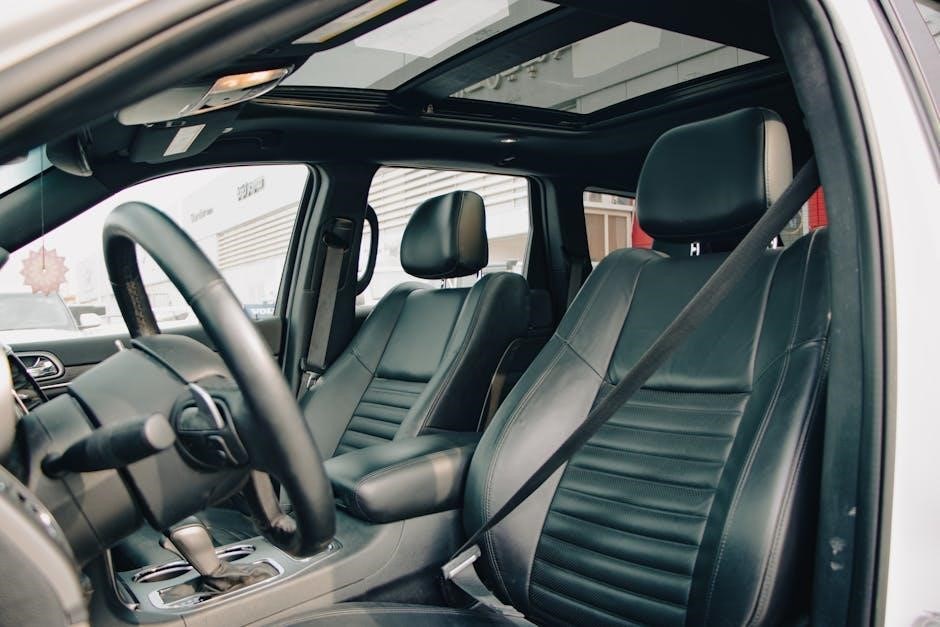
The 2013 Jeep Grand Cherokee owner’s manual details the various seating configurations and adjustments available, including power-adjustable seats with memory functions, if equipped. It explains how to operate the seat heaters and ventilation systems for enhanced comfort. Learn about the proper use of child safety seats and the location of LATCH anchors.
The manual also outlines the numerous interior storage compartments, including the glove box, center console, door pockets, and rear cargo area. Discover the location and operation of the power liftgate and folding rear seats for maximizing cargo space. Understanding these features, as described in the manual, allows you to efficiently utilize the vehicle’s interior for passengers and belongings, ensuring a convenient and organized journey.